
Elite Running Mechanics Analysis of Sebastian Sawe: Biomechanical Insights from Sports2Science Chennai
When the world watches elite marathon runners like Sebastian Sawe, what they see is speed, rhythm, and endurance.
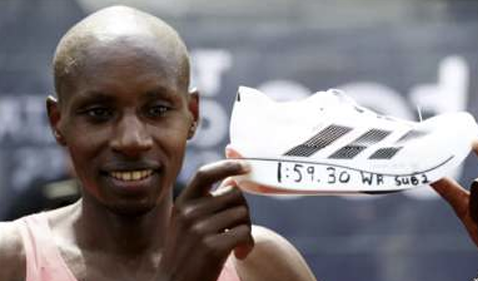
But behind that performance lies something much deeper:
A highly optimized biomechanical system designed for:
- Running economy
- Energy efficiency
- Fatigue resistance
- Injury minimization
- Elite propulsion mechanics
At Sports2Science in Chennai, we performed an advanced biomechanical running analysis inspired by the movement mechanics demonstrated by Sebastian Sawe to understand what makes elite marathon running so efficient.
This article explores:
✔ Running mechanics
✔ Biomechanical efficiency
✔ Running economy
✔ Force transfer
✔ Elite asymmetry patterns
✔ Injury risk analysis
✔ Performance optimization strategies
for runners around the world.
Why Sebastian Sawe’s Running Mechanics Matter
Elite marathon runners like Sebastian Sawe are not simply “fit.”
They are biomechanically efficient.
Every stride is optimized to:
- Reduce braking forces
- Conserve energy
- Maximize elastic recoil
- Delay fatigue
- Maintain propulsion over 42.2 km
This is why biomechanical analysis has become one of the most important tools in:
- Elite marathon training
- Running injury prevention
- Performance enhancement
- Movement optimization
At Sports2Science Chennai, we analyze these movement patterns scientifically to help runners improve their efficiency and reduce injury risk.
What is Running Biomechanics Analysis?
Running biomechanics analysis evaluates:
- Joint angles
- Force application
- Limb coordination
- Running symmetry
- Trunk mechanics
- Propulsion efficiency
- Injury risk factors
At Sports2Science, our running gait analysis in Chennai includes:
✔ High-speed video analysis
✔ Running mechanics assessment
✔ Movement asymmetry profiling
✔ Performance movement analysis
✔ Injury risk screening
✔ Running economy interpretation
The purpose is not to make every runner move identically.
Instead, the goal is to identify:
- Efficient mechanics
- Compensatory strategies
- Energy leaks
Injury-producing movement patterns
Disclaimer:
This biomechanical analysis is based on movement patterns observed in elite marathon runner Sebastian Sawe and is intended purely for educational and awareness purposes. Elite athlete mechanics are highly individualized and developed through years of training, strength adaptation, and performance demands; therefore, these patterns should not be directly imitated without proper professional assessment and guidance.
1. Tibial Angle Analysis – One of the Biggest Predictors of Running Economy
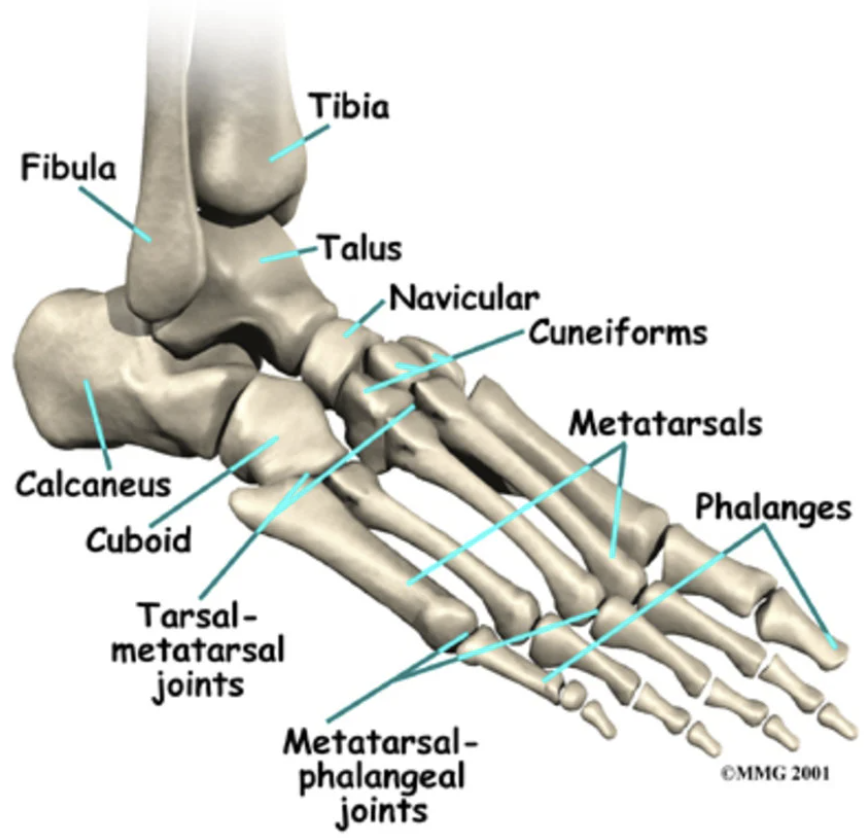
One of the standout findings in this analysis inspired by Sebastian Sawe’s running mechanics was the near-vertical tibial angle at foot strike.
This means the foot lands almost directly under the body’s center of mass.
Tibia Angle
Why This Matters
A near-vertical tibia:
✔ Minimizes braking forces
✔ Preserves forward momentum
✔ Reduces knee stress
✔ Reduces tibial loading
✔ Improves running economy
This is one of the most common characteristics observed in elite marathon runners.
Key Insight from Sports2Science
The movement pattern demonstrated exceptional left-right symmetry — a hallmark of elite neuromuscular control and efficient force application.
2. Forward Lean and Elite Marathon Efficiency
Another key parameter analyzed was forward trunk lean.
Elite runners like Sebastian Sawe typically lean slightly forward from the ankles — not excessively from the waist.
The analysis demonstrated:
- Left: 11.4°
- Right: 14.9°
Forward Lean
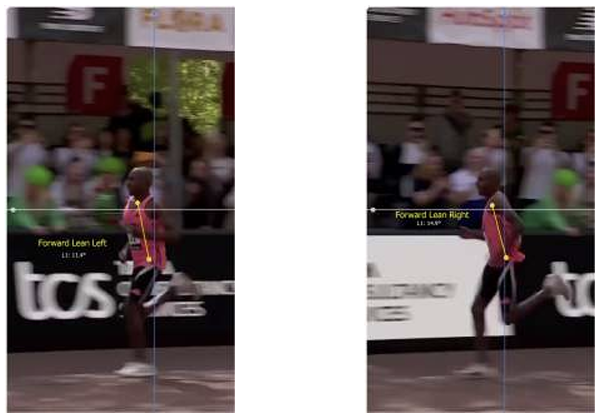
Why Forward Lean Matters
Efficient forward lean:
✔ Uses gravity to assist propulsion
✔ Reduces active muscular effort
✔ Conserves energy
✔ Improves running economy over long distances
However, asymmetrical trunk lean may influence:
- Hip loading
- Pelvic control
- Lumbo-pelvic fatigue
- Long-distance compensation patterns
This is why movement analysis is critical even for elite runners.
3. Knee Flexion During Swing Phase – Compact Recovery Mechanics
One of the most fascinating findings was the asymmetry in knee flexion.
The analysis revealed:
- Right knee flexion: 144.8°
- Left knee flexion: 127.7°
Knee Flexion
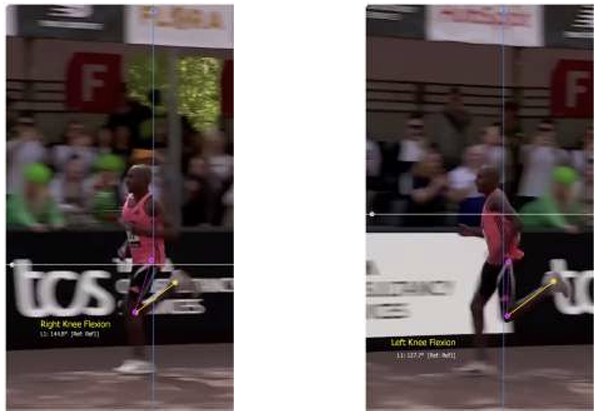
What This Means
Higher knee flexion during swing:
✔ Reduces limb inertia
✔ Improves cadence efficiency
✔ Reduces metabolic cost
✔ Supports rapid stride recovery
The right side demonstrated a compact and highly efficient recovery strategy commonly seen in elite marathon runners.
4. Hip Flexion Strategy – Elite Movement Adaptation
The running analysis revealed an interesting movement coordination pattern:
- Left side → Hip-driven swing
- Right side → Knee-driven compact recovery
Hip Flexion
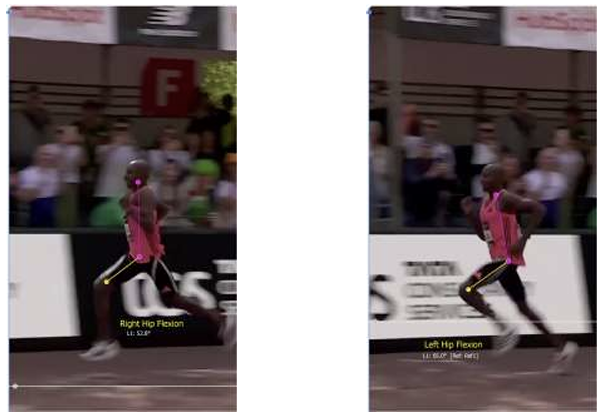
Important Sports Science Insight
Not all asymmetries are dysfunctions.
In elite runners like Sebastian Sawe:
- One limb may contribute more to propulsion rhythm
- The other may prioritize recovery efficiency
This is known as a complementary asymmetry strategy.
At elite levels, efficiency matters more than visual symmetry.
5. Hip Extension – The Engine Behind Elite Running
Hip extension is one of the strongest indicators of efficient propulsion.
The analysis demonstrated:
- Left hip extension: 23.8°
- Right hip extension: 22.5°
Hip Extension
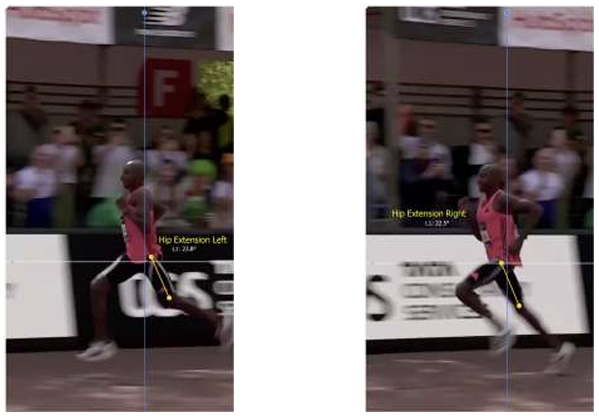
Why Hip Extension Matters
Efficient hip extension:
✔ Improves propulsion
✔ Enhances glute activation
✔ Supports elastic energy transfer
✔ Stabilizes the pelvis
✔ Reduces energy cost
This is one of the reasons elite runners maintain pace so efficiently over marathon distances.
Running Injury Risk Analysis
At Sports2Science, biomechanical analysis also focuses on identifying injury risks before symptoms appear.
Highest Risk Identified: Left Hip Flexor Overuse
The analysis suggested increased load on:
- Iliopsoas
- Rectus femoris
- Anterior hip structures
Why?
- Higher hip flexion
- Reduced knee flexion
- Increased muscular demand during swing
Potential Outcomes
- Hip flexor tightness
- Tendinopathy
- Reduced stride efficiency under fatigue
Right Hamstring Strain Risk
The right side demonstrated:
- High knee flexion
- Rapid limb recovery
- Increased eccentric loading
Potential Risks
- Hamstring strain
- Posterior chain fatigue
- Late-race performance decline
This highlights how elite performance can sometimes create specialized loading demands.
The Most Important Performance Insight
The most important finding from this running biomechanics analysis was this:
✔ Propulsion remained symmetrical
✔ Asymmetry existed mainly during swing phase recovery
This is critical.
Elite runners often prioritize:
- Energy efficiency
- Elastic recoil
- Performance sustainability
over perfectly symmetrical movement.
What Recreational Runners Can Learn from Sebastian Sawe
Runners worldwide can learn several important principles from elite biomechanics:
1. Avoid Overstriding
Landing too far in front increases:
- Braking forces
- Knee stress
- Energy cost
2. Improve Cadence
A slightly higher cadence often improves:
- Foot placement
- Running economy
- Injury reduction
3. Develop Posterior Chain Strength
Strong glutes and calves improve:
- Propulsion
- Elastic recoil
- Running efficiency
4. Don’t Force Artificial Mechanics
Elite mechanics are the result of:
- Strength
- Coordination
- Speed
- Neuromuscular adaptation
Not forced positioning.
Running Biomechanics Analysis in Chennai – Sports2Science
At Sports2Science, we provide advanced:
- Running gait analysis
- Sports biomechanics
- Marathon performance analysis
- Injury risk assessment
- Human movement analysis
- Athlete performance profiling
for:
✔ Marathon runners
✔ Recreational runners
✔ Elite athletes
✔ Coaches
✔ Rehabilitation clients
Why Sports2Science?
Located in Chennai, Sports2Science combines:
- Sports science
- Human biomechanics
- Movement analysis
- Injury prevention
- Performance optimization
to help athletes and runners move better, perform better, and stay injury free.
Final High-Performance Interpretation
The running mechanics inspired by Sebastian Sawe demonstrated:
✔ Elite-level running economy
✔ Efficient force transfer
✔ Intelligent asymmetry adaptation
✔ Strong propulsion mechanics
✔ Exceptional fatigue resistance
Most importantly:
The injury risks identified were not due to dysfunction — but due to the repetitive demands of elite performance specialization.
That is what world-class biomechanics often looks like.
Looking for Running Mechanics Analysis in Chennai?
If you are searching for:
- Running biomechanics analysis Chennai
- Running gait analysis Chennai
- Marathon running assessment India
- Sports biomechanics lab Chennai
- Running injury analysis
- Running performance optimization
Visit: